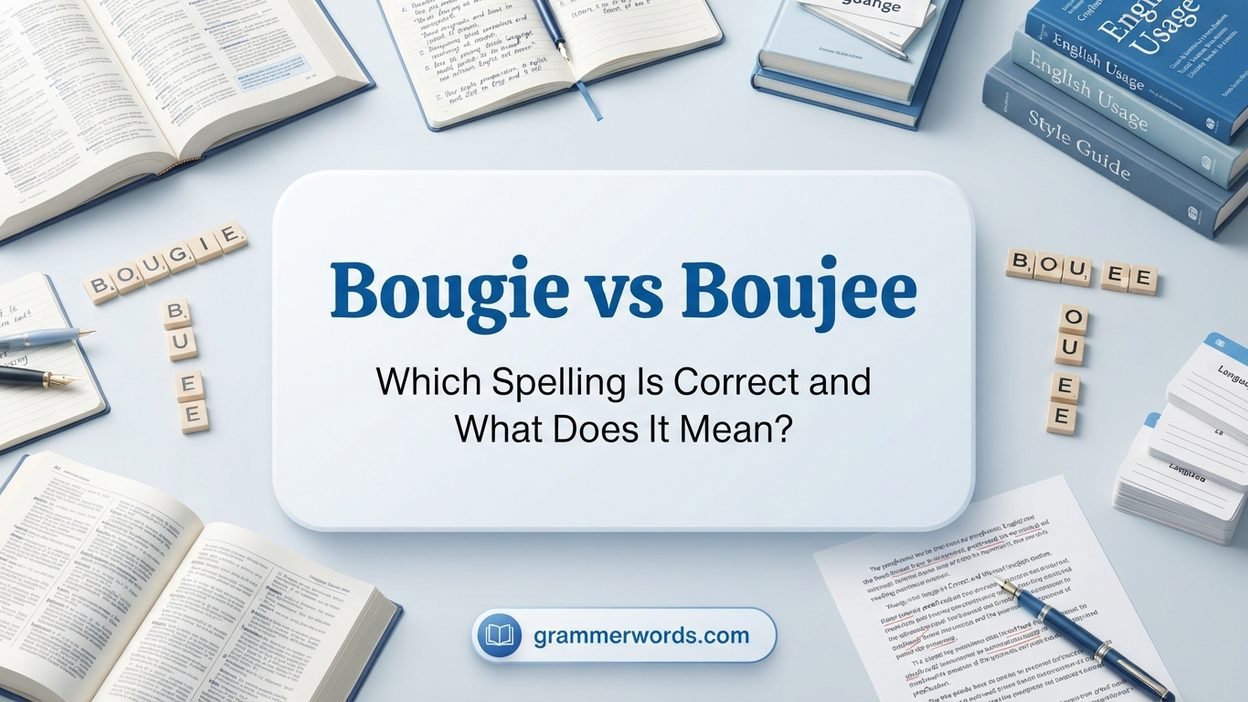
If you wonder about bougie or boujee, both spellings appear in modern slang. However, understanding the bougie spelling helps explain its meaning and correct usage. The word often describes someone fancy, stylish, or drawn to luxury. In American English, people commonly use it in casual, everyday conversations.
Still, bougie and boujee have different histories and cultural flavors. The bougie definition connects with bourgeoisie, while boujee gained wider attention through pop culture. Both can suggest expensive tastes, a luxury lifestyle, or a certain social status. So, knowing the spelling difference makes it easier to choose the right word.
Quick Answer
Use “bougie” when you want the established spelling. Use “boujee” when you’re writing casually or intentionally leaning into a playful slang style.
Both spellings generally refer to someone or something associated with luxury, expensive tastes, middle-class or upper-middle-class aspirations, or a lifestyle that emphasizes comfort and status.
Cambridge Dictionary describes bougie as an informal US term connected with middle-class identity and an interest in money, education, social class, or expensive and unusual things. It also lists bougie as a noun for a person with those characteristics.
Dictionary.com goes a step further by listing boujie, boujee, and boojie as alternative spellings. It identifies bougie as the most common spelling.
| Spelling | Status | Typical setting | General meaning |
| bougie | Established spelling | General writing and conversation | Upscale, luxury-oriented, status-conscious |
| boujee | Common variant | Texting, social media, pop culture | Same basic meaning with a more stylized feel |
| boujie | Less common variant | Informal writing | Same slang concept |
| boojie | Less common variant | Very casual writing | Same general slang concept |
For most situations, bougie is the safest choice.
If you’re writing a text such as “This brunch spot is so boujee,” the alternative spelling works naturally. The spelling choice becomes more about voice and style than a change in meaning.
Comparison Overview
The difference between bougie and boujee is smaller than many people assume.
The two spellings usually point to the same modern slang idea. The major distinction comes from usage, spelling convention, and cultural tone.
| Feature | Bougie | Boujee |
| Standard dictionary form | Yes | Usually treated as a variant |
| Informal | Yes | Yes |
| Refers to luxury or upscale tastes | Yes | Yes |
| Can describe a person | Yes | Yes |
| Can describe a place | Yes | Yes |
| Can describe food or fashion | Yes | Yes |
| Common in social media | Yes | Yes |
| Strongly associated with pop culture | Somewhat | Especially recognizable through “Bad and Boujee” |
| Suitable for formal academic writing | Usually not | Usually not |
| Best general-purpose spelling | Yes | No |
One useful rule makes the choice easy:
When in doubt, write “bougie.”
That spelling has the clearest dictionary support for the modern slang meaning. If you’re writing dialogue, a caption, a text, or a deliberately playful phrase, boujee can fit perfectly well.
Main Differences Between Bougie and Boujee
At first glance, the difference looks like a single vowel. In practice, the distinction involves spelling convention and cultural context.
Bougie Is the Established Spelling
Bougie is the form to choose when you want the word in its most established modern English spelling.
Cambridge lists it as an informal US adjective and noun. Dictionary.com also identifies bougie as the most common spelling while listing several variants.
That makes bougie the natural choice for:
- Edited articles
- General-interest writing
- Dictionary-style definitions
- Explanatory writing
- Everyday conversation
- Informal but polished messages
- Search-friendly educational content
It also looks less like an intentional phonetic respelling. That matters when you’re writing for people who may not know the slang.
Boujee Is a Familiar Slang Variant
Boujee is not simply a random misspelling that people invented yesterday.
Dictionary.com specifically identifies it as a variation of bougie.
The spelling became particularly recognizable through popular culture. Migos released “Bad and Boujee” in 2016. The song became a viral hit and eventually reached the top of the Billboard Hot 100 after widespread attention in 2017. The Recording Academy notes that Donald Glover’s 2017 Golden Globes praise helped push the song further into the cultural spotlight.
That history matters because spelling isn’t always a purely grammatical decision.
Sometimes people choose a spelling because it feels like the culture surrounding the word.
The Meaning Usually Doesn’t Change
Someone who says, “That’s so bougie,” and someone who says, “That’s so boujee,” generally communicate the same basic idea.
For example:
“This hotel is ridiculously bougie.”
“This hotel is ridiculously boujee.”
Both sentences suggest an upscale or luxurious atmosphere. The second spelling can feel slightly more playful or internet-oriented.
The distinction resembles the difference between a conventional spelling and a deliberately stylized spelling. The underlying idea stays intact while the presentation changes.
Read More: Naive vs Nieve: Which Spelling Is Correct? Meaning, Pronunciation, and Examples
What Does Bougie Mean?
Bougie describes a person, thing, place, habit, or lifestyle associated with upscale tastes, luxury, comfort, social status, or middle-class and upper-middle-class aspirations.
However, the word has more texture than simply saying rich or expensive.
A $500 dinner can be expensive. Calling it bougie may suggest something more specific about the experience. Perhaps the restaurant has minimalist decor, tiny tasting portions, imported ingredients, expensive wine, and a reservation system that requires planning three months ahead.
That’s the flavor of the word.
Cambridge connects bougie with middle-class identity and with giving significant importance to money, education, social class, or expensive and unusual things.
Dictionary.com gives the word several related shades. These include enjoying luxury and comfort, aspiring toward upper-middle-class status, or displaying newly acquired wealth.
That explains why bougie can sound either complimentary or insulting.
Bougie Does Not Simply Mean Rich
This distinction is easy to miss.
Someone can be wealthy without being bougie. Someone can also have modest finances while enjoying things that others might describe as bougie.
Consider these examples:
- A person who collects rare watches might be called bougie.
- A person who orders a $9 specialty coffee every morning might jokingly call themselves bougie.
- A small apartment filled with designer furniture might have a bougie aesthetic.
- A luxury resort might be described as bougie even when the speaker admires it.
The word focuses partly on taste and presentation.
Money can be part of the picture. It isn’t the entire picture.
Where Did the Word Bougie Come From?
Here’s where the story gets more interesting.
The modern slang bougie comes from a shortening and alteration of bourgeois. Dictionary.com dates the American slang form to the late 1960s.
The older word bourgeois has a much longer history.
Etymonline traces bourgeois to French bourgeois, which developed from Old French terms meaning a town dweller. The word eventually became associated with the French middle class and later acquired broader social and cultural meanings.
Over time, bourgeois developed meanings connected with conventional middle-class manners, tastes, values, and social position.
The modern slang form shortened that larger word into something much punchier:
bourgeois → bougie
That transformation isn’t unusual in language. Slang frequently compresses longer words until they become easier to say and more flexible in casual conversation.
The French Word “Bougie” Is Different
There is an important linguistic trap here.
The French word bougie exists independently. In French, bougie means candle. It can also mean spark plug in automotive contexts. Cambridge’s French-English dictionary confirms both meanings.
That French word has a different history from the American slang bougie.
Etymonline traces the French noun bougie to the city of Bougie in Algeria. The city was historically associated with the wax trade.
So the two words happen to look identical while coming through different linguistic pathways.
| Word | Meaning | Historical connection |
| bougie in American slang | Upscale, status-conscious, luxury-oriented | Shortened from bourgeois |
| bougie in French | Candle; spark plug | French bougie, associated with Bougie in Algeria |
| bourgeois | Middle-class or socially conventional; also used in political and economic contexts | French and Old French roots |
That distinction prevents a common etymology mistake.
Why Do People Spell It Boujee?
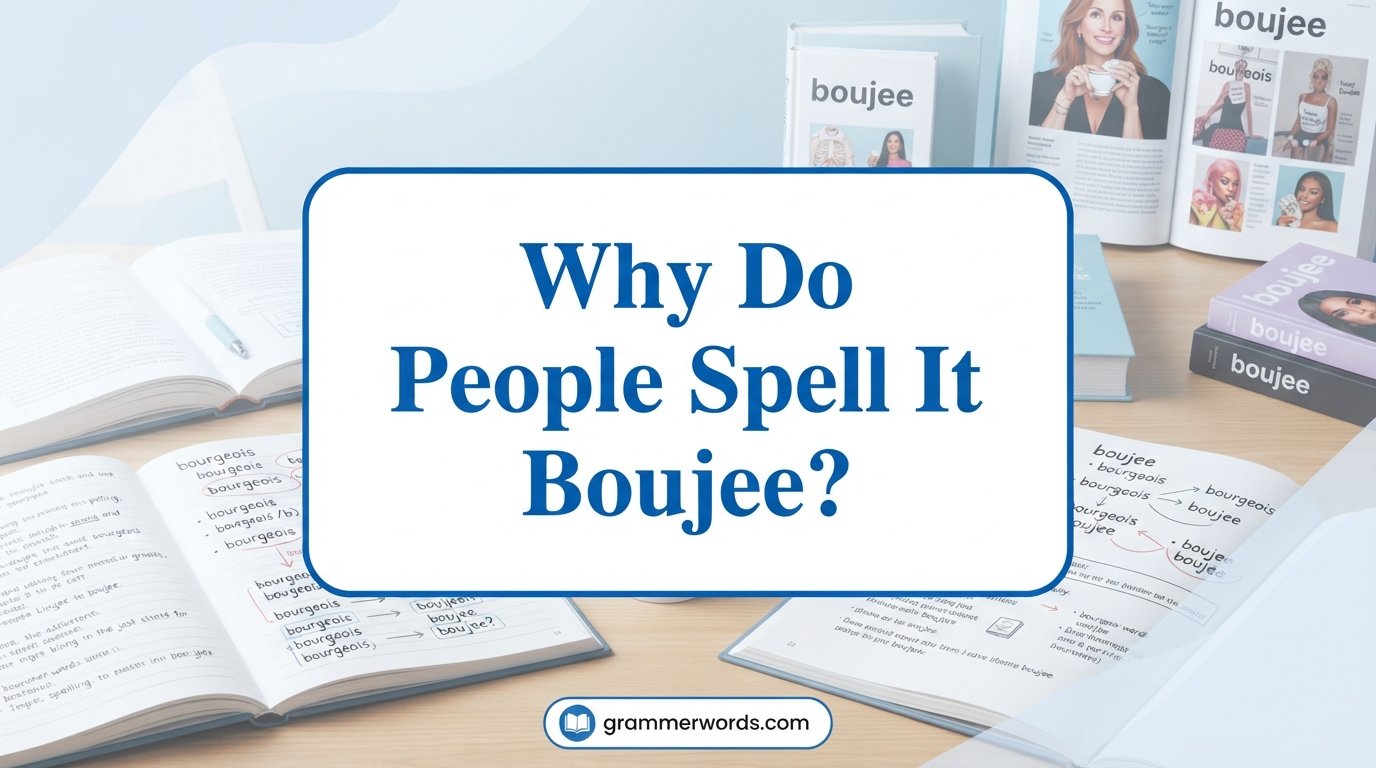
The spelling boujee looks closer to the way many English speakers perceive the pronunciation.
It also carries a distinctly casual appearance. The extra e gives the word a visual style that fits texting, captions, memes, music, and social media.
Then popular culture amplified it.
Migos’ “Bad and Boujee” became a major cultural reference in the late 2010s. The song was released in 2016 and later reached No. 1 on the Billboard Hot 100. The Recording Academy describes it as a viral hit that became a defining rap release of the period.
That doesn’t mean Migos invented boujee.
The slang word and related forms existed before the song. What the song did was help make the boujee spelling highly visible to a massive mainstream audience.
This is a useful lesson in how language evolves.
A spelling can become culturally familiar because millions of people encounter it in a song, meme, television show, advertisement, or social-media post. Once enough people use it, the form becomes recognizable even when another spelling remains more established in dictionaries.
How Do You Pronounce Bougie and Boujee?
In American English, the modern slang word is commonly pronounced with a “boo” sound at the beginning followed by a sound similar to the middle of measure or genre.
Cambridge gives the US pronunciation of bougie as /ˈbuː.ʒi/ while also recording a variant pronunciation with a /dʒ/ sound.
Dictionary.com likewise records multiple pronunciations for the word.
The important point is that spelling doesn’t perfectly predict pronunciation.
Bougie and boujee can represent the same spoken slang word even though they look different on the page.
Is Bougie a Compliment or an Insult?
That depends almost entirely on context.
Calling someone bougie can be affectionate teasing between friends. It can also criticize someone for appearing materialistic or pretentious.
Consider these three examples:
Playful: “You won’t drink regular coffee anymore? Look at you getting bougie.”
Admiring: “That rooftop bar is bougie, but the view is incredible.”
Critical: “The neighborhood has become so bougie that the old character is disappearing.”
The same word carries different emotional weight in each sentence.
Cambridge labels the modern slang sense informal and disapproving, which reflects one important side of its usage. Dictionary.com also identifies several potentially disparaging senses.
Still, everyday speakers frequently use the word playfully.
That’s why context matters more than a rigid “positive” or “negative” label.
Bougie vs. Fancy vs. Luxurious vs. Pretentious
These words overlap. They aren’t interchangeable.
| Word | Main idea | Typical tone |
| Bougie | Upscale or status-conscious taste | Playful, neutral, or critical |
| Fancy | More elaborate or expensive than ordinary | Usually mild or positive |
| Luxurious | High comfort, quality, or expense | Usually positive |
| Upscale | Higher-end or premium | Mostly neutral |
| Pretentious | Trying too hard to appear sophisticated or important | Clearly negative |
| Posh | Stylish and expensive with strong social-class associations | Often British-flavored |
Imagine a restaurant with marble tables, imported olive oil, $30 cocktails, and tiny tasting plates.
Calling it luxurious emphasizes comfort and quality.
Calling it upscale emphasizes its market position.
and Calling it bougie adds a social observation about its style and clientele.
and Calling it pretentious makes a much stronger judgment.
Those distinctions matter when you’re trying to communicate precisely.
When Should You Use Bougie?
Bougie works best when the conversation is informal or conversational.
Use it when you want to capture a mixture of luxury, taste, lifestyle, and social attitude in one compact word.
Common examples include:
- “This coffee shop is so bougie.”
- “I bought a bougie little candle.”
- “Her apartment has a very bougie vibe.”
- “That hotel looks incredibly bougie.”
- “I’m feeling bougie tonight.”
- “He has expensive taste, but he’s not particularly bougie.”
- “The new restaurant is trendy and slightly bougie.”
Notice how the word works with people and objects.
It can describe a person, place, product, experience, or lifestyle.
When Should You Use Boujee?
Choose boujee when the writing deliberately sounds casual, playful, or culturally stylized.
It’s especially natural in:
- Text messages
- Social media captions
- Memes
- Informal comments
- Casual dialogue
- Humorous posts
- Pop-culture references
For example:
“We got reservations at that boujee new place.”
“Feeling boujee after payday.”
“My little boujee coffee order is worth every penny.”
The spelling gives those sentences a more relaxed internet-era personality.
If you’re writing a formal report, however, bougie is already informal enough that you may want a different word altogether.
Is Bougie Appropriate in Professional Writing?
Usually, no if the writing requires a formal register.
That doesn’t mean the word is grammatically wrong. It means the word carries slang and cultural associations that may not fit the setting.
For a business report, you might write:
- upscale
- luxury-oriented
- premium
- high-end
- affluent
- status-conscious
For a lifestyle article, magazine feature, advertisement, or casual business blog, bougie can work perfectly well.
The best word depends on the meaning you need.
For example:
“The hotel attracts a bougie clientele.”
This sounds conversational and slightly cheeky.
“The hotel attracts an affluent clientele.”
This sounds more formal and neutral.
The second sentence doesn’t mean exactly the same thing. It simply removes the slang and social judgment.
Common Mistakes With Bougie and Boujee
Treating Boujee as a Completely Different Word
Usually, it isn’t.
Boujee is generally a spelling variation of bougie. Dictionary.com explicitly lists it that way.
Assuming Boujee Is Always Wrong
That conclusion ignores actual usage.
People use boujee widely in casual English. Popular culture has also made the spelling highly recognizable.
For polished writing, bougie remains the safer choice.
For casual writing, boujee can be completely natural.
Using Bougie as a Synonym for Rich
That’s too narrow.
The word often describes taste, social presentation, lifestyle, and perceived status rather than wealth alone.
Assuming Bougie Always Means Something Negative
Not necessarily.
Someone might say:
“This is so bougie and I absolutely love it.”
The speaker clearly isn’t using the word as a serious insult.
Confusing Bougie With Bourgeois
The words are historically connected. They aren’t interchangeable in every sentence.
Bourgeois has established historical, social, political, and economic meanings. Bougie functions primarily as modern informal slang in the sense discussed here.
Confusing Slang Bougie With French Bougie
The French word means candle and can also mean spark plug. That isn’t the same word as American slang bougie.
Bougie in Everyday Examples
The best way to understand the word is to watch how it behaves in ordinary conversation.
Food and Drinks
“This place is so bougie. They serve sparkling water in crystal glasses.”
Here, bougie suggests an upscale experience with a slightly humorous edge.
Coffee
“My coffee order has become embarrassingly bougie.”
The speaker is joking about increasingly elaborate preferences.
Fashion
“She has a bougie style with designer sunglasses and minimalist outfits.”
The word describes a recognizable aesthetic rather than simply saying the clothes are expensive.
Travel
“We booked a bougie resort for our anniversary.”
This use can sound affectionate and celebratory.
Home Decor
“The living room looks bougie without feeling overdone.”
Here, bougie describes polished luxury and presentation.
Personal Lifestyle
“I used to drink instant coffee. Now I’m apparently bougie.”
This is a self-deprecating use. The speaker turns the word into a joke about changing preferences.
Bougie in Texting and Social Media
Social media has made bougie unusually flexible.
A person can use it as an adjective:
“This hotel is bougie.”
They can use it as part of a humorous self-description:
“Entering my bougie era.”
They can use it as playful commentary:
“Okayyy, look at you getting bougie.”
They can even exaggerate the word for comic effect:
“The candles have candles. This place is bougie.”
That flexibility explains why the term works so well online.
It compresses a complicated idea into one recognizable word.
Bougie vs. Boujee: Practical Decision Guide
Use this simple guide when you’re stuck.
| Situation | Recommended wording |
| Dictionary definition | bougie |
| Formal article | bougie, or a more precise formal synonym |
| Academic writing | Prefer a precise formal term |
| Professional email | Usually use a clearer synonym |
| Text message | bougie or boujee |
| Instagram caption | bougie or boujee |
| Meme | Either |
| Song or cultural reference | Preserve the original spelling |
| Quoting someone | Keep their spelling |
| General-purpose writing | bougie |
The most useful rule is simple:
Choose bougie for conventionality. Choose boujee for style.
Case Study: Why “Bad and Boujee” Matters
The phrase “Bad and Boujee” offers a useful example of how language can move between slang and mainstream culture.
Migos released the song in 2016. It became a viral sensation before reaching No. 1 on the Billboard Hot 100 in January 2017. The Recording Academy describes the track as a major hit that helped establish Migos as one of the defining rap groups of that period.
The song didn’t create the underlying concept of bougie.
Instead, it helped attach the boujee spelling and phrase to a huge pop-cultural moment.
That distinction matters.
Language rarely has one neat “birth moment.” Words develop gradually. Slang spreads through communities. Music accelerates exposure. Social media then pushes familiar expressions into new groups of speakers.
The result is what happened with boujee: a spelling that was already in use became much more culturally visible.
Is “Boujee” in the Dictionary?
The answer depends on the dictionary.
Dictionary.com has a dedicated boujee entry and defines it as a variation of bougie.
Cambridge’s current English entry focuses on bougie and provides its adjective and noun senses.
That difference illustrates an important point about dictionaries.
Dictionary coverage doesn’t determine whether people actually use a word. Dictionaries document language. Different editorial teams add variants at different times and according to different criteria.
So the most accurate way to describe the situation is:
- Bougie is the established dictionary form for the modern slang sense.
- Boujee is a well-known variant.
- Both occur in real-world English.
- The meanings generally overlap.
- Bougie is the safer choice when you want conventional spelling.
Is Bougie a Bad Word?
No.
Bougie isn’t profanity or an inherently offensive swear word.
However, it can carry a negative social judgment.
Calling someone bougie may imply that they care too much about money, status, expensive products, education, class signals, or luxury. Cambridge and Dictionary.com both recognize potentially disapproving or disparaging aspects of the modern term.
That’s why saying:
“You’re so bougie.”
can land very differently depending on who says it and how.
Between close friends, it might produce a laugh.
In a workplace conversation about someone’s background, it could sound dismissive.
The word itself isn’t profanity. Context gives it its social edge.
Frequently Asked Questions
Is bougie or boujee correct?
Bougie is the established spelling for the modern slang term. Boujee is a recognized variant spelling that works well in casual writing.
Do bougie and boujee mean the same thing?
Yes, they usually share the same meaning. Both can describe luxury, expensive tastes, upscale lifestyles, or status-conscious choices.
Is boujee a misspelling of bougie?
Not necessarily. Boujee is a common variant spelling used in modern slang, especially in casual conversations, social media, and pop culture.
What does bougie mean when describing a person?
Bougie can describe someone who enjoys luxury, fancy things, or an upscale lifestyle. It can sound playful, admiring, or critical depending on the context.
When should you use bougie instead of boujee?
Use bougie when you want the most established and widely recognized spelling. Choose boujee when a casual, playful, or pop-culture style fits the context.
Final Verdict
When choosing between bougie or boujee, bougie remains the established spelling and safest general choice. Boujee works as a playful variant spelling, especially in casual writing, social media, and pop culture. Both usually share the same meaning, describing luxury, fancy tastes, and an upscale lifestyle, but context can shape the word’s tone.